Cat Photography on the South Shore: What to Expect at a Cat Portrait Session
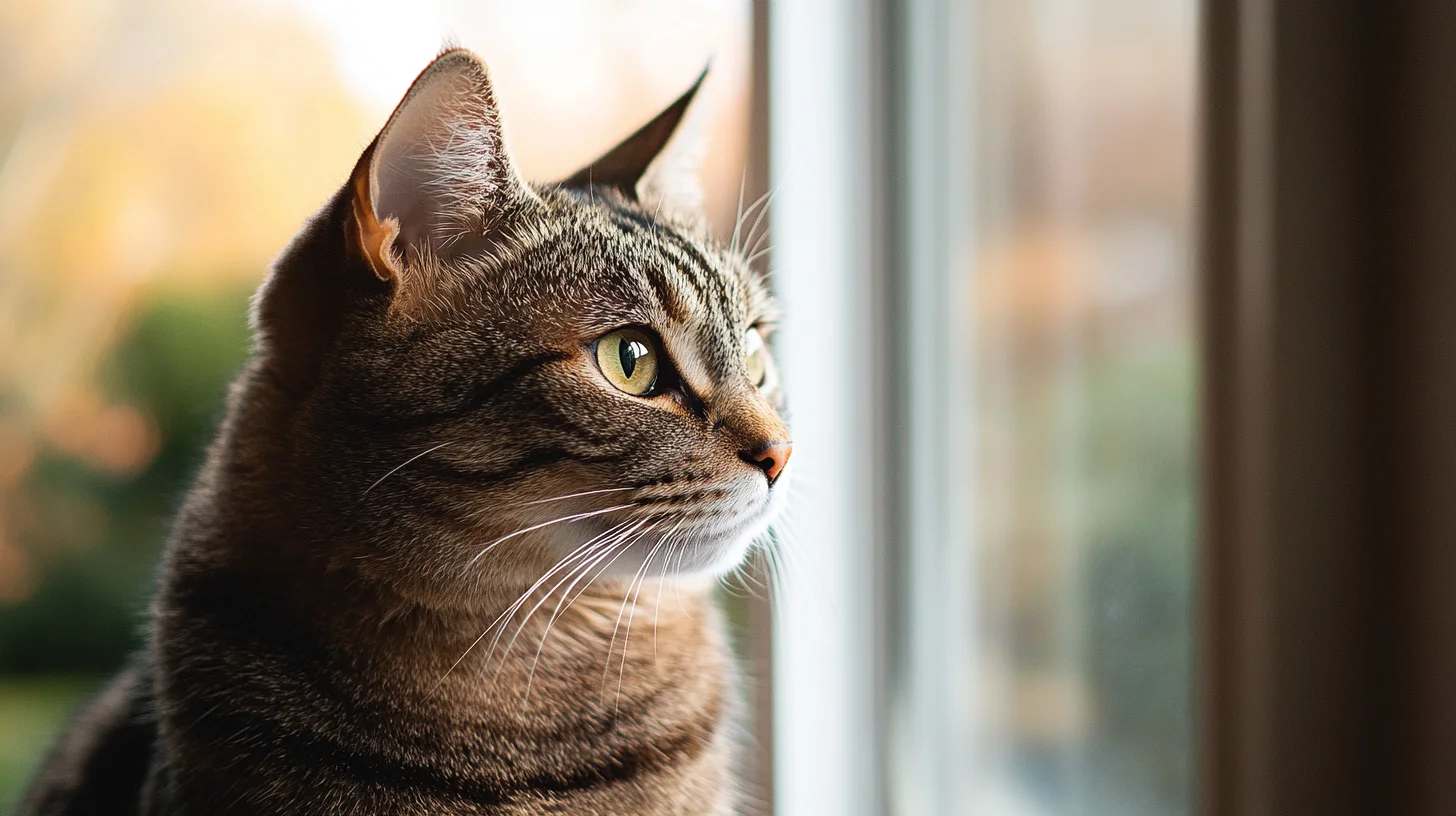
I'll be honest with you upfront: cats are harder to photograph than dogs. Dogs can be moved, redirected, coaxed into better light, driven to a scenic location, and — with enough treats — talked into a pretty reliable sit-stay. Cats operate entirely on their own terms, on their own schedule, in their own territory. You do not move a cat to the light. You wait for the cat to find the light on their own and then you get out of the way.
But that constraint is also what makes a great cat portrait so remarkable. When you catch a cat in a genuine moment of presence — alert and expressive and fully themselves — it is one of the most alive portraits in animal photography. There is no performance in it. The cat is not doing anything for you. They are just being exactly who they are, and your job is to be patient enough and quiet enough to be there when it happens.
Professional cat photography on the South Shore of Massachusetts works differently from dog photography in almost every practical way. Sessions happen in the cat's own home, in the rooms and spots they actually use, on a schedule built around the cat's natural activity windows rather than golden hour at a park. I move around the cat. The cat does not move for me. Here is exactly what to expect.
1. Why Cat Photography Is Different From Dog Photography
The most fundamental difference is location. Nearly every dog session I do happens outdoors — at a beach, a trail, a meadow, one of the many beautiful spots along the South Shore coastline from Scituate down through Duxbury. The open space gives us room to move, dynamic backgrounds, and access to the natural light that makes outdoor portraits so beautiful.
Most cat sessions happen indoors, in the cat's own home. This is not a compromise — it is actually the right call for almost every cat. A cat's home is their entire world. Every corner of it is familiar and safe. When you photograph a cat in that environment, you are photographing them in the place where they are most relaxed, most expressive, and most themselves. You are capturing them in the patch of afternoon sun they have claimed as theirs since they were a kitten. That context is irreplaceable.
Control is the other major difference. With a dog, I can shape the session — move them into better light, redirect their attention, ask for a sit. With a cat, I adapt to whatever the cat decides to do. If the cat wants to sit on the bookshelf, we work with the bookshelf. If they want to walk to the kitchen and investigate the cabinet, I follow them and wait to see if something interesting happens along the way. The photographer's job with a cat is to be present, quiet, observant, and fast — not to direct.
The upside is that in-home sessions produce portraits that are genuinely specific to that individual cat. The window seat where they watch birds every morning. The arm of the couch they've claimed despite everyone's best efforts to discourage it. The afternoon sun patch on the kitchen floor. These are not generic portrait backdrops — they are the locations that define who your cat actually is.
2. How In-Home Cat Sessions Work
Cat sessions run 60 to 90 minutes — longer than a typical dog session. This is intentional. A dog session can hit its stride within the first 15 minutes. A cat session needs more runway because the first 20 minutes or so are almost entirely about letting the cat acclimate to a stranger in their space before expecting any real cooperation.
When I arrive, I do not immediately move toward the cat or try to make contact. I set down my bag, talk quietly with you about the session, and let the cat investigate on their own timeline. I stay low when I can. I avoid direct sustained eye contact, which cats read as a threat. Most cats — even the ones whose owners describe them as “shy” or “not a people cat” — will work their way toward curiosity within about 20 minutes if the new presence in their home is calm and non-threatening.
Before I arrive, a few things help: clear the window sills of clutter in rooms with the best light, identify which rooms have the largest, cleanest windows, and have a favorite toy or treat ready. You don't need to do a deep clean of the house — I'm not photographing the room, I'm photographing the cat — but the window areas I'm likely to use do benefit from a quick tidy.
For multi-cat households, I typically focus on each cat individually first, working with whoever is most available and cooperative at the start of the session. If the cats interact naturally — grooming each other, sharing a perch, doing the slow-blink thing at each other — I'll absolutely capture those moments. But I don't try to engineer cat-to-cat interactions. They happen or they don't, and forcing them produces nothing useful.
3. Using Window Light for Cat Portraits
Window light is the primary tool in in-home cat photography — and most homes on the South Shore have significantly better light than their owners realize. Large windows, particularly in older New England homes with their generous room proportions, can produce portrait-quality light that rivals outdoor golden hour when the conditions are right.
The direction matters. North-facing windows produce the softest, most even light — no direct sun, consistent throughout the day, beautiful for detail and texture work. East-facing windows give warm morning light that shifts through the room as the sun rises — excellent for a morning session. West-facing windows produce that late-afternoon glow similar to outdoor golden hour — warm, directional, and stunning on orange, brown, or tabby coats.
The good news is that I don't have to fight cat behavior to use this light — cats find it naturally. Every cat I have ever photographed has a window spot. It is where they spend a significant portion of their day, which means it is already set up as the perfect portrait location. I use the cat's own behavior as the compositional logic rather than trying to impose one.
Even the patches of direct sun on a hardwood floor — the kind of sun patch that no cat can resist — can produce beautiful portraits when the angle is right. A cat stretched out in afternoon sun coming through a south-facing window, completely relaxed, is one of the most visually satisfying subjects in portrait photography. That moment costs nothing to set up. You just have to be there when it happens.
4. What Makes a Great Cat Portrait
The expressions worth waiting for are specific and recognizable once you know what to look for. Direct eye contact is rare and precious — when a cat decides to hold your gaze through a camera, it feels like an event. Mid-yawn is theatrical and oddly honest — a fully open mouth on a cat is not undignified, it is exactly the kind of unguarded moment that makes a portrait feel real. Grooming shots — a paw lifted to the ear, a tongue mid-swipe — are intimate and soft in a way that posed portraits rarely are. And the alert ears-forward expression — the “what was that?” moment right after a sound from another room — is perhaps the most characteristically cat of all.
Background management in a home is one of the practical skills that separates professional cat photography from iPhone snapshots. I cannot move the cat to a clean background — but I can adjust my angle, my focal length, and my depth of field to reduce visual clutter without touching a thing. A small shift in camera position can move a distracting background element completely out of frame. I work around the home rather than rearranging it.
Coat color affects how I approach the light. Tabbies and patterned coats show their markings most clearly in soft, directional light — window light from the side rather than front-on. Solid black cats need rim light or backlight to avoid losing detail in their coats — a window slightly behind them creates that separation. White cats are sensitive to warm or harsh light and photograph best in the cooler, even light of a north-facing window or overcast sky through glass.
The patience factor is real. The best cat portraits from any session almost always come in the last 30 minutes, not the first. By then, the cat has forgotten I'm there. They've gone back to their normal behavior — the nap, the grooming, the window-watching — and I'm just a quiet presence in the room with a camera. That's exactly where I want to be.
5. Who Cat Sessions Are Right For
The most obvious answer: cat owners who want portraits at the same quality level as their dog-owner friends get from a professional session. There is no reason a cat should be photographed any less seriously than a dog. They are just as individual, just as beloved, and just as deserving of a portrait that actually captures who they are.
Cat sessions are particularly well-suited for senior cats. An older cat who does not travel well, who finds car trips stressful, or who has health conditions that make outings difficult is a perfect candidate for an in-home session. They never have to leave their space. The session comes to them, on their turf, at whatever pace they can handle. I have photographed cats who could not move quickly and cats who slept through most of the session — both produced beautiful portraits because we worked with what the cat could actually do.
Multi-pet households often find it valuable to have cat and dog portraits from the same photographer — same editing style, same quality level, portraits that actually match when you put them on the wall together. I do both. A household session that covers the dog outdoors and the cats at home is absolutely something we can structure. See the general pet photographer page for how mixed-pet sessions are scheduled.
Cat portrait sessions also make an excellent gift — perhaps more so than dog sessions, because cat owners are slightly less likely to book one for themselves. If someone in your life has a cat they talk about constantly, a portrait session is a genuinely meaningful gift. They get to keep the portraits forever.
Finally: memorial portraits. If a cat is aging, ill, or has been diagnosed with something serious, a portrait session right now — while they are still present, still themselves — is one of the most meaningful things you can do. I approach these sessions gently and without time pressure. The goal is simply to document who this cat is, so that you have something real to hold onto.
Common Questions About Cat Sessions
Can cat sessions be done outdoors?
Occasionally — for cats comfortable on a harness and leash, outdoor sessions are possible and can produce beautiful results. For most indoor cats, in-home is both safer and more practical, and the portraits tend to be more authentic to who the cat actually is. An indoor cat let loose in an unfamiliar outdoor space is usually more anxious than expressive, and anxiety does not photograph well.
My cat hides when strangers come over. Will this even work?
I start at a distance and let the cat dictate the pace entirely. I sit low, stay quiet, and do not push for contact. Shy cats often surprise their owners — given 20 to 30 minutes of low-pressure presence, most come around enough to photograph well. If a cat truly won't engage during a particular session, we can reschedule for a time of day when they are typically more active. I have never written off a cat as unphotographable.
Do you photograph cats with their owners?
Yes — person-with-cat portraits are absolutely possible and often among the most meaningful images from a session. The best ones happen when the owner is genuinely interacting with the cat rather than posing stiffly for the camera. A cat asleep across a shoulder, a head-butt in progress, a shared moment on the couch — these are the images that people keep for decades.
How many usable photos come from a cat session?
Typically 20 to 40 strong selects from a 60 to 90 minute session, depending on how cooperative the individual cat is. Cat galleries often have more visual variety than dog sessions — different rooms, different lighting setups, different moods across the arc of the session — even with a shy subject. The final gallery reflects what actually happened, not a fixed number.
Pro Tip
“Schedule the session 30 to 45 minutes after the cat's morning meal. A fed, alert cat in that post-breakfast window — before the midday nap hits — is the sweet spot: curious, comfortable, and awake enough to be expressive. Don't withhold food hoping they'll be more active. A hungry cat is just cranky.”
Your Cat Deserves a Proper Portrait
Cat sessions are quieter and more patient than dog sessions, but the results are just as extraordinary. The full South Shore cat photography service page covers session structure, location options, and pricing. Get in touch and we'll find the right time.
Interested in photographing your other pets too? See everything covered on the other pets page, or browse the gallery to get a sense of the style and quality.
Keep Reading
BEHIND THE LENS
What You Actually Get When You Hire a Professional Dog Photographer
Everything that goes into a professional session — applies to cats too...
REACTIVE DOGS
Reactive Dog Photography: What Every Owner Needs to Know
Working with animals on their own terms — the same philosophy applies to cats...
“It was so fun and easy to work with Chris, and our dogs loved him, too! The photos and artwork are beautiful! Highly recommend booking a session.”

About the Author
Chris McCarthyProfessional Dog Photographer · Rockland, MA · 11+ years experience
I've photographed hundreds of dogs across the South Shore and Greater Boston since 2014 — every breed, size, age, and temperament. My own rescue, Sully, was reactive and anxious when I got him, and working with him every day taught me how to photograph dogs that other photographers find difficult. I specialize in reactive and shy dogs, seniors, and memory sessions — the sessions that matter most and need the most patience.