Can My Reactive Dog Have a Photo Session? A Decision Guide
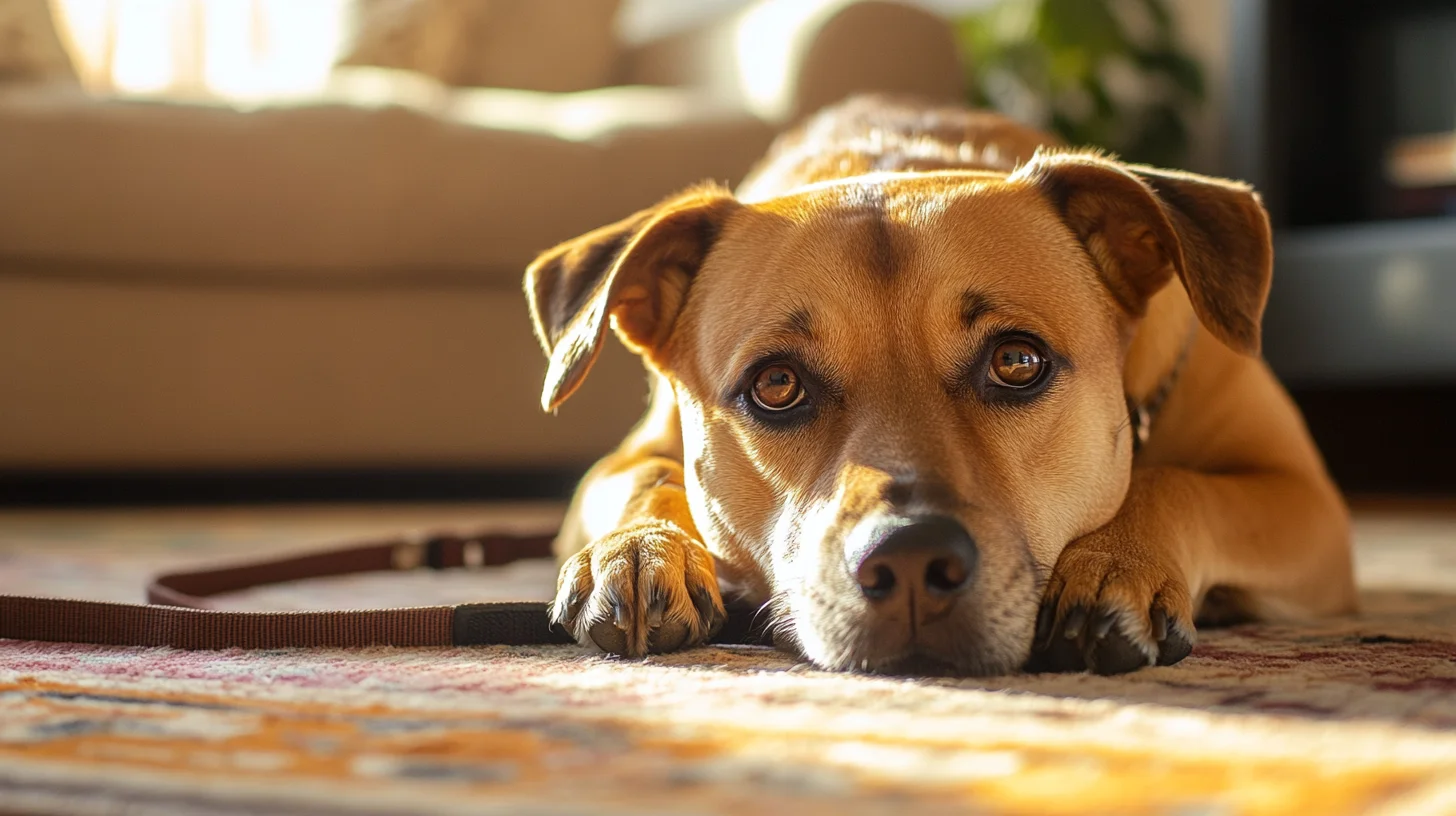
Short answer: almost always yes — and probably more easily than you think. I've been photographing reactive, fearful, and anxious dogs on the South Shore for over a decade, and the pattern is consistent: owners expect the session to be hard, and in most cases it isn't. The hard part was the decision to book. This guide is built to help you make that decision honestly. It walks through the four questions I ask on every pre-session call, the specific scenarios where I would actually recommend waiting, and the information I need from you to plan a session that works for your dog specifically.
The Four Questions That Determine If a Session Will Work
These are the questions I work through with every owner who contacts me about a reactive dog. They take about ten minutes on the phone. At the end of the call, we both know whether a session makes sense and what it should look like.
1. What is your dog actually reactive to?
Other dogs is the most common trigger, followed by strangers, then specific stimuli (skateboards, bikes, men with hats, vacuum cleaners). Almost every reactive dog is reactive to a subset — not to everything. Knowing the trigger tells me which environments are safe. A dog-reactive dog can usually have a session at an empty beach or a private park with no issue. A stranger-reactive dog needs me to arrive and sit still for the first fifteen minutes while they decide I'm fine.
2. What does their reaction actually look like?
Barking and lunging on a leash when they see another dog is very different from freezing, panting, and trying to flee. The first is an arousal response that usually dissolves once the trigger is out of sight. The second is a fear response that needs longer decompression time and a genuinely private location. Neither prevents a session — they just shape it differently.
3. How long does it take them to recover after a trigger event?
Some dogs reset in sixty seconds. Others stay physiologically elevated for an hour. For a dog with a long recovery window, we plan the session around trigger avoidance entirely — which often means an in-home session or a 6 a.m. beach session, not an 11 a.m. park. Knowing the recovery window tells me how much room for error I have.
4. Are they working with a trainer or a veterinary behaviorist?
If yes, I'd like to know. Sometimes your trainer has specific handling protocols that the session should follow. Sometimes your dog is on anti-anxiety medication that changes their presentation. None of this disqualifies a session — it just helps me plan correctly. A reactive dog with a trainer is usually an easier session than one without, because the owner already has tools to redirect and decompress.
The Three Situations Where I'll Actually Suggest Waiting
These are real and uncommon. I see them maybe two or three times a year. When they come up, I'll tell you honestly and help you understand what would need to change before we try.
A dog within the first four weeks of a new home. A rescue or newly-placed dog is still in decompression. Their baseline is moving. I can't plan a session around a dog whose own behavior is still unstable — they need more time to know who they are in their new life. I'll ask you to wait six to eight weeks, and then we'll plan something appropriate. The exception is a memory session for a dog known to be very ill — those we do immediately and adapt entirely to the dog.
A dog with a recent major bite history toward people. Not every bite is the same — a dog who nipped once when startled is not a bite-risk dog. But a dog with a documented pattern of going for strangers needs a different kind of session than I can safely provide. I'd refer you to a photographer who specializes in behavior-case work, or suggest we wait until your behaviorist signs off on photographic work.
A dog in the middle of a medication transition. If you're starting or titrating off an anti-anxiety or SSRI medication, wait until the protocol stabilizes. Photographs from a medication transition window will look like a dog who isn't quite themselves — because they aren't. Give it four to six weeks after stabilization.
What Reactive Dog Sessions Usually Look Like
For a dog-reactive dog: I pick an empty outdoor location. Ames Nowell State Park in Abington on a weekday morning. The north end of Duxbury Beach at 7 a.m. A private yard where you know nobody else will walk in. We go slowly for the first ten minutes so your dog can settle. Then we make photographs for as long as they hold. Sessions usually run 60 to 75 minutes instead of the standard 90.
For a stranger-reactive dog: I come to you. I arrive ten minutes early, sit on your steps, and let your dog investigate me from their own doorway. I don't extend a hand. I don't talk to the dog. I talk quietly to you. Somewhere around minute fifteen, most dogs decide I'm acceptable. Then we begin. In-home sessions for stranger-reactive dogs produce some of the best portraits in my gallery — there's a depth of expression that dogs only show in their own environment.
For a sound-sensitive or environment-sensitive dog: we do everything indoors. Your home, your back deck, or the Rockland studio if they're comfortable there. We eliminate unpredictability entirely. The leash stays on throughout and is removed in editing.
What I Need From You Before the Session
Specific, honest information. What calms your dog. What sets them off. How they communicate that they're reaching threshold — the first early signs, not the full meltdown. What high-value treats or toys they will actually engage with. Whether they have a favorite location that I should consider using. Whether they're better in the morning or evening.
You are not going to surprise me. I've worked with dogs across the full behavioral spectrum since 2014. I would rather know everything up front than be caught off-guard at minute thirty.
If You're Still Unsure
Book the phone call, not the session. The pre-session call is free, there's no commitment, and by the end of it we'll both know whether your dog is a fit. If the answer is no, I'll tell you — and I'll tell you what would need to change. If the answer is yes, we'll plan the session together with your dog's specific needs in mind.
The owners who end up most delighted with their reactive dog's portraits are almost always the ones who assumed it wouldn't work. When it does, the feeling — of seeing your dog looking calm, bright-eyed, and present in a portrait — is genuinely difficult to describe. That is the session I am trying to make possible.
Key Learning
“The question isn't whether a reactive dog can have a beautiful session. It's whether the photographer will plan one around the actual dog in front of them, instead of the dog they wish they had. Every reactive dog I've photographed — and there have been many — has walked away with a portrait gallery that the owner genuinely didn't believe was possible. That is the entire point of specializing in this work.”
Book a Free Pre-Session Call
Tell me about your dog, their triggers, and what you're hoping for. Ten minutes on the phone, no pressure to book. By the end of the call we'll both know whether a session makes sense and what it should look like.
Keep Reading
REACTIVE DOGS
Reactive Dog Photography: What Every Owner Needs to Know
The broader framework — how reactivity actually expresses itself in a session and why controlled environments change the equation...
WHAT TO EXPECT
A Reactive Dog Photo Session, Minute by Minute
From arrival to departure — exactly what happens during a reactive dog session, and why each piece is designed the way it is...
SERVICE PAGE
Reactive Dog Photographer — Massachusetts
The dedicated service page for reactive dog sessions — what's included, how scheduling works, and what investment looks like...
RESCUE DOGS
Rescue & Shelter Dog Photography on the South Shore
How sessions work for dogs still in decompression — what the timeline looks like and why waiting sometimes matters more than photographing...
CASE STUDY
Before & After: Photographing a Fear-Reactive Rescue Dog
A full case study from a South Shore session — the adopter's worries, the session plan, what actually happened, and the final portraits...
REACTIVE
Leash-On Dog Photography
Why leashes stay on during reactive sessions and how they're removed in editing.
“It was so fun and easy to work with Chris, and our dogs loved him, too! The photos and artwork are beautiful! Highly recommend booking a session.”
Related: common dog behavior questions about parks, separation, and boredom.

About the Author
Chris McCarthyProfessional Dog Photographer · Rockland, MA · 11+ years experience
I've photographed hundreds of dogs across the South Shore and Boston since 2014 — every breed, size, age, and temperament. My own rescue, Sully, was reactive and anxious when I got him, and working with him every day taught me how to photograph dogs that other photographers find difficult. I specialize in reactive and shy dogs, seniors, and memory sessions — the sessions that matter most and need the most patience.