Working Dog Activities in New England — Cart Pulling, Skijoring, and More
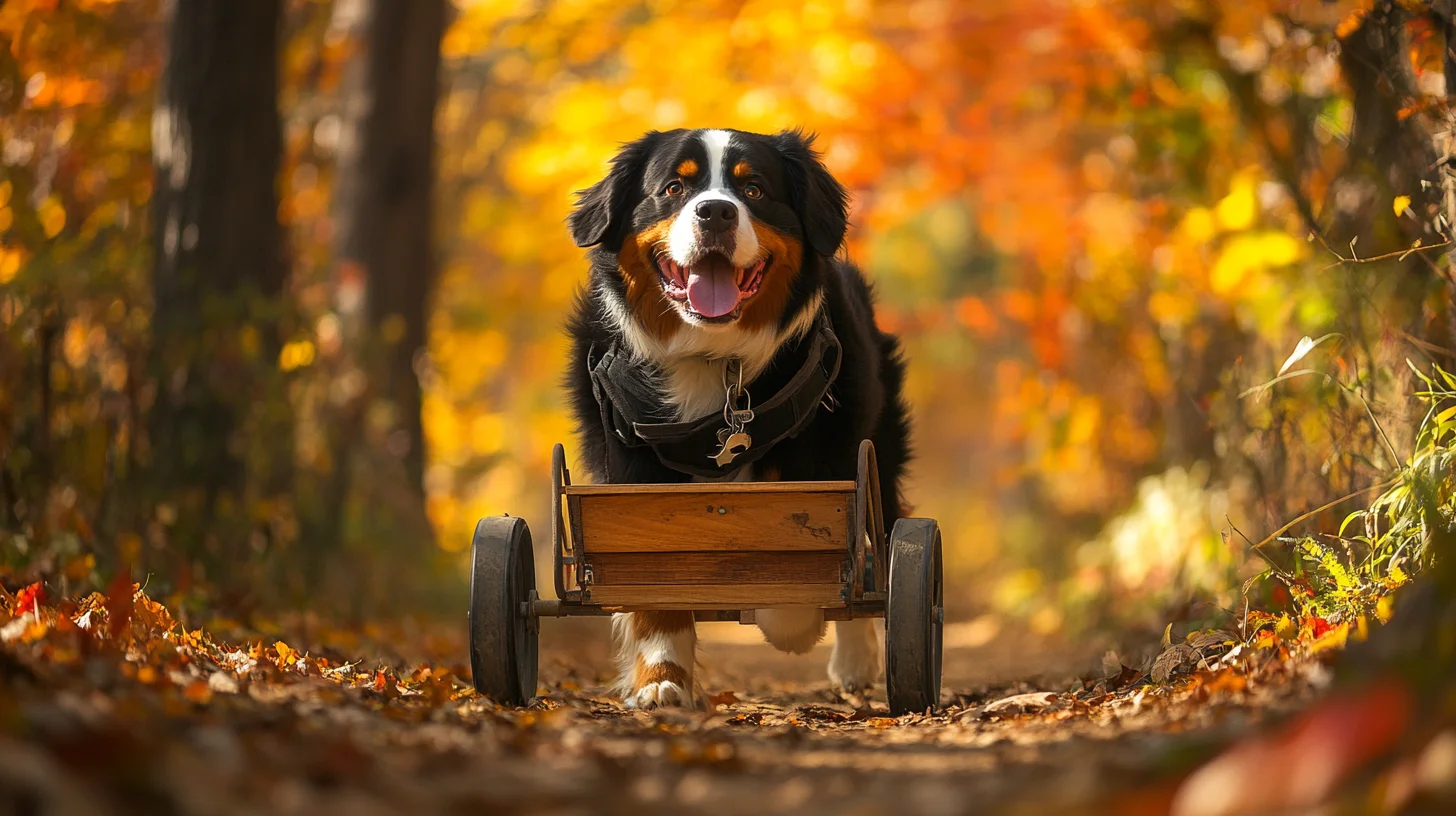
Working breeds were not designed for the suburb. Bernese Mountain Dogs were drafting cheese carts in alpine villages. Huskies were running sleds across Siberia. German Shepherds were patrolling flocks. Border Collies were managing entire herds. When you live with one of these dogs in a modern Massachusetts neighborhood, you're asking a creature built for ten hours of physical and mental work per day to be content with a twenty-minute walk and a Kong toy.
The dogs that thrive in New England suburbs are the ones whose owners find them something real to do. What follows is a practical guide to working dog activities available in Massachusetts and the surrounding New England states — what each activity involves, which breeds it suits, what gear you need, and where to find clubs or trainers.
1. Cart Pulling and Drafting
Drafting — pulling a wheeled cart or sled — is the original working role for several breeds. Bernese Mountain Dogs, Greater Swiss Mountain Dogs, Saint Bernards, Newfoundlands, and Rottweilers all have draft work in their breed history. The activity is functional, not just symbolic: a fit drafting-breed dog can comfortably pull 50 to 150 pounds of cargo at a walking pace.
Gear: A proper drafting harness (not a regular walking harness — the load is distributed differently), a single or double shaft cart, and a sturdy traffic-leash setup. Quality starter carts run $300–$800. Harnesses are $80–$200. Avoid no-name harnesses — poorly designed gear is the leading cause of soft-tissue injury in drafting dogs.
Training: Start with empty cart conditioning at 6–12 months old, never load weight until growth plates close (around 18 months for large breeds). Begin on flat, predictable surfaces. The Bernese Mountain Dog Club of America and regional Berner clubs run drafting clinics in spring and fall.
Where in MA: Bernese Mountain Dog Club of New England (BMDCNE) runs drafting training and events. Look for events at Berner-friendly venues like Stoneleigh-Burnham in Greenfield and various BMDCNE-hosted clinics around central Massachusetts.
2. Skijoring
Skijoring is cross-country skiing pulled by one or more dogs. The dog wears a pulling harness, you wear a hip belt, and a bungee line connects you. It's arguably the most fun activity available to a Husky, Malamute, Samoyed, or any other northern breed in winter — and you don't need a sled team to do it. One or two dogs is enough.
Gear: Skijor harness ($60–$120), hip belt ($40–$80), bungee skijor line ($30–$60), and cross-country skis. Total entry cost can be under $200 if you already have skis.
Where in MA/NH: Wachusett Mountain in Princeton and several New Hampshire ski areas (Bretton Woods, Jackson XC) allow or host skijor sessions. Best Northeast trails are in the Great North Woods, but local cross-country trails work fine for beginners. New England Sled Dog Club is the regional resource.
3. Bikejoring and Canicross
Bikejoring is the bike version of skijoring — one or two dogs in pulling harnesses connected to a bike via a bungee line. Canicross is the running version: dog harness, hip belt, bungee line, and you run together. Both are year-round, both are accessible to non-northern breeds, and both burn enormous amounts of energy. Most working-breed dogs love them.
Gear: Same harness as skijoring (pull-style, not walking-style), bungee line, and either a mountain bike with a bike antenna (a long stiff rod that keeps the line away from your front wheel) or running-belt and shoes. Cost: $150–$300 to start.
Where in MA: Most rail trails work — Cape Cod Rail Trail, Norwottuck Rail Trail, Bay Colony Rail Trail. Look for traffic-free dirt or hard-packed paths. Avoid asphalt long-term — the heat and impact are hard on dog pads.
4. Herding Trials
For Border Collies, Australian Shepherds, German Shepherds, Belgian Malinois, and other herding breeds, formal herding trials are the most direct expression of breed purpose. Trials use sheep, ducks, or cattle, and dogs are judged on their ability to move the stock through a course under direction.
Even if you have no intention of competing, an instinct test (called “HIC” — Herding Instinct Certified) gives you a controlled environment to see what your dog actually does around livestock. Most working-bred Border Collies and Aussies show clear herding behavior within minutes of seeing sheep for the first time.
Where in MA: Several farms in central and western Massachusetts host AKC and AHBA-sanctioned herding trials and offer training clinics. The New England Sheepherders Association is the primary regional resource. Expect to drive — most facilities are 90+ minutes from the South Shore.
5. Scent Work and Nose Work
Scent work is one of the most accessible working-dog activities — it requires almost no physical space, no special breed, and minimal gear. Dogs search for specific target odors (typically birch, anise, clove) hidden in containers, rooms, or outdoor environments. The activity is mentally exhausting in the best way: most dogs come home from a one-hour scent class and sleep deeply for hours.
Where in MA: NACSW (National Association of Canine Scent Work) sanctions trials across New England, with multiple training facilities on the South Shore and Greater Boston offering classes. Many traditional obedience clubs now include scent work training.
Why this works for reactive dogs: Scent work is one of the few formal activities a leash-reactive or human-shy dog can do safely. Sessions are typically one dog at a time in a controlled space. For more on working with reactive dogs in non-competitive contexts, see the reactive dog photographer page.
6. Weight Pull
Weight pull is exactly what it sounds like — a controlled, structured test of a dog's ability to pull a weighted sled or cart over a short distance. Pit bulls, American Staffordshire Terriers, Alaskan Malamutes, Bernese Mountain Dogs, and Rottweilers compete in this sport at sanctioned events. Done correctly (proper harness, conditioning, appropriate weight progression), it's safe and the dogs love it.
Important caveat: Weight pull done WRONGLY — wrong harness, untrained dog, unrealistic weight — causes serious injury. Never attempt this without proper training from an experienced handler. The International Weight Pull Association (IWPA) sets the standards used by most legitimate clubs.
7. Dock Diving
Dock diving — dogs leap from a dock into a pool to retrieve a toy or chase a target — is among the easiest competitive activities to start with. Most water-loving retrievers (Labs, Goldens, Chesapeakes, Portuguese Water Dogs, Standard Poodles) take to it within their first session. The activity is high-energy, low-stress for the handler, and produces some of the most photogenic dog moments in any sport.
Where in MA: Several pet venues host DockDogs and North America Diving Dogs (NADD) events seasonally. Splash facilities run try-it sessions for owners curious whether their dog will take to the water before committing to a season.
8. Agility
Agility is one of the most widely available dog sports in Massachusetts. Dogs run a timed obstacle course — jumps, tunnels, weaves, A-frames — under the handler's direction. The activity rewards working-breed traits Border Collies, Aussies, and Shelties express naturally: focus on the handler, fast direction changes, and intensity over short bursts.
Unlike skijoring or carting, agility requires zero special breed background. Mixed-breed dogs, terriers, retrievers, and even small breeds compete at the same venues. The American Kennel Club (AKC), USDAA, and NADAC all sanction trials throughout the year, and most regions have at least one drop-in agility class within a 30-minute drive.
Where in MA: Boston-area training facilities like Masterpeace Dog Training in Franklin, Riverside K9 in Newton, and numerous South Shore obedience clubs offer beginner agility classes. Most run six- to eight-week sessions for $200–$400.
9. Barn Hunt and Earthdog
Barn Hunt is a relatively new sport that's an excellent fit for terriers, dachshunds, and any prey-driven dog. A rat is enclosed in a safe, ventilated tube and hidden in a hay-bale course; the dog must find the live rat and alert the handler. The sport is humane (the rat is never harmed, never directly accessible) and channels prey drive productively.
Earthdog is a related test specifically for small terriers and dachshunds — dogs follow a man-made tunnel to a caged quarry and indicate the find. Both sports give terriers and similar breeds an outlet for prey drive that's otherwise hard to satisfy in suburban environments. The Barn Hunt Association lists New England trials and trainers seasonally.
How to Pick the Right Activity for Your Dog
Match the activity to the breed's heritage where possible. A herding breed thrives most clearly with herding work. A draft breed wants a job that involves weight and persistence. A scenthound or terrier benefits from nose work or barn hunt. Northern breeds prefer pulling.
If you don't know your dog's breed background — or you're working with a mixed-breed rescue — start with scent work or agility. Both have very low barriers to entry, work with any temperament, and reveal your dog's natural inclinations within a few sessions. Most working-breed-frustration problems improve within four to six weeks of starting any structured activity.
Why This Matters: Working Breeds Need Work
The single most common pattern I see in working-breed dogs with behavior problems on the South Shore is under-stimulation. A two-year-old Border Collie who has never seen sheep, never run with a bike, and gets two leash walks a day is going to invent his own work — and the work he invents is usually destructive. Couch-shredding, barking, digging, fence-running, obsessive chasing. None of that is bad dog behavior. It's a working dog filling a void.
You don't have to compete to give a working breed real work. Even casual cart-pulling around the neighborhood, weekly scent work classes, a regular bikejor route, or sheep-herding instinct exposure once or twice a year is enough to shift a frustrated working dog into a satisfied one. Find the activity that fits your breed's heritage, and the dog will tell you the rest.
Capturing These Activities in Photographs
A working dog in motion — pulling, jumping, herding — produces images that a posed portrait can't match. The dog is fully engaged, fully themselves, working out of pleasure rather than for the camera. Action photography of working dogs requires faster shutter speeds, anticipation, and patience, but the results are some of the most rewarding portraits I make.
For the photography craft side specifically, see the working-breed dog photography guide. For breed-specific portrait pages, the German Shepherd, Border Collie, Australian Shepherd, and Husky pages cover working-breed specifics. The full dog portrait photography overview covers studio vs. outdoor.
Photograph Your Working Dog at Work
Outdoor action sessions with working breeds across the South Shore — herding, drafting, dock diving, or just running flat-out at the beach. Sessions from $395.
For photography ideas matching working-breed action shots, see 47 dog photography ideas.
For more on Siberian Husky traits relevant to sled and pull sports, see husky tails, snow nose, and other Siberian Husky quirks.
Related guide: New Puppy Portrait Sessions — capture the puppy window before it's gone — booking new-puppy sessions.

About the Author
Chris McCarthyProfessional Dog Photographer · Rockland, MA · 11+ years experience
I've photographed hundreds of dogs across the South Shore and Greater Boston since 2014 — every breed, size, age, and temperament. My own rescue, Sully, was reactive and anxious when I got him, and working with him every day taught me how to photograph dogs that other photographers find difficult. I specialize in reactive and shy dogs, seniors, and memory sessions — the sessions that matter most and need the most patience.