Dog Parks, Leaving Them Alone, and What Your Dog Actually Needs
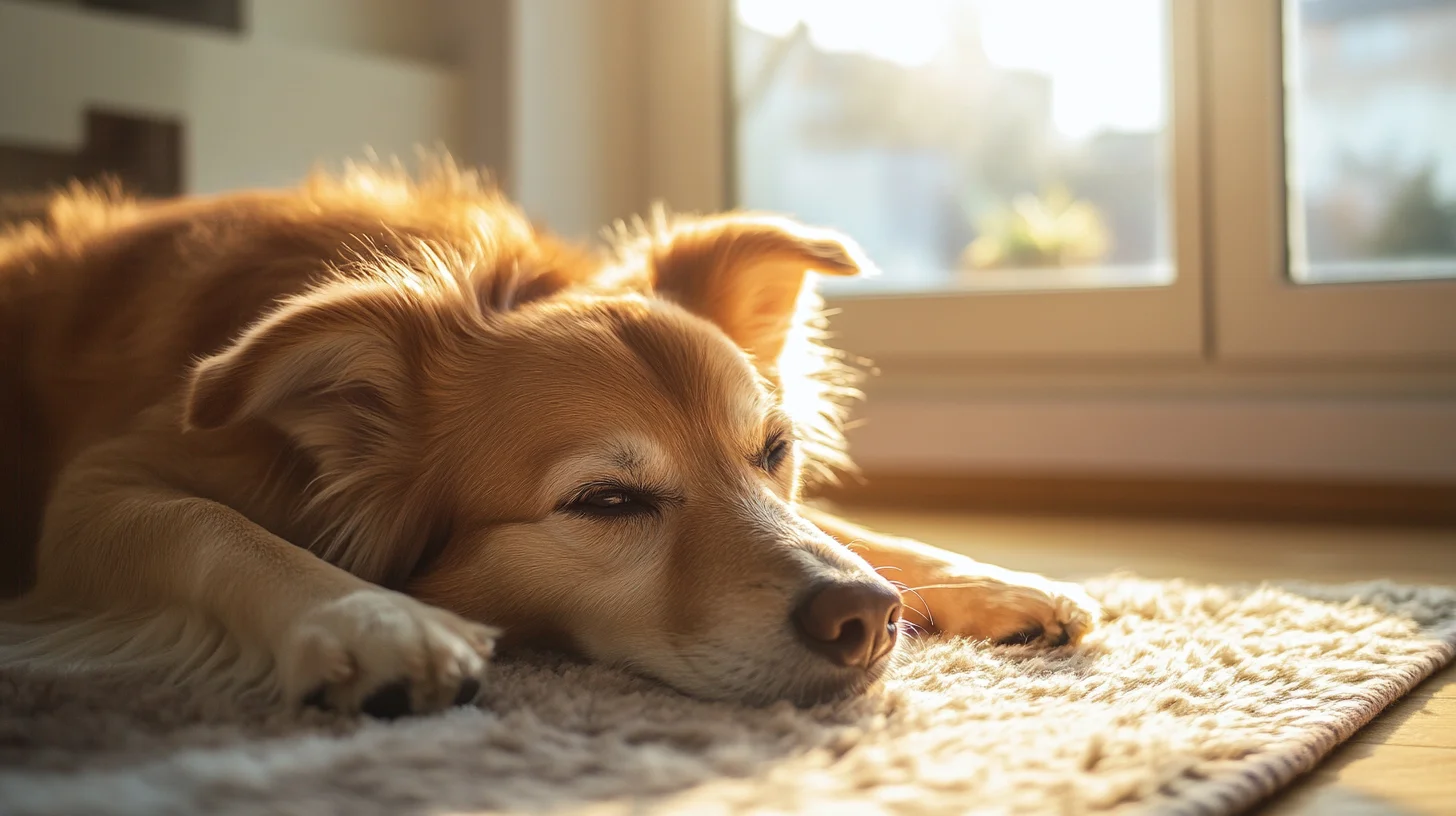
After more than a decade of photographing dogs across the South Shore, I get asked the same six questions over and over by owners trying to do right by their dogs. Some of the questions come up before the session in pre-shoot calls. Others come up in conversation while we're shooting. Most of them carry a real undercurrent of guilt — owners worried they're not doing enough, or worried they're doing something wrong.
None of what follows is veterinary or behavioral advice. I'm a photographer, not a vet or a credentialed trainer. But I work with hundreds of dogs every year, in every temperament category, and I've learned what consistently helps and what consistently doesn't. Here's the practical version.
1. Are Dog Parks Actually Good for Dogs?
For some dogs, yes. For many dogs, not really. For a meaningful minority, dog parks make behavior actively worse.
Dogs who do well at dog parks tend to be confident, neutral-to-friendly with all body styles and energy levels, well-socialized as puppies, and generally not reactive on leash. Their owners actively supervise rather than checking their phone, and they leave the moment things shift — the over-aroused chase that's about to escalate, the dog being repeatedly bullied, the resource guard starting at the water bowl.
Dogs who do poorly at dog parks: anxious or fearful dogs (the park amplifies their fear), reactive dogs (the proximity is too much), under-socialized rescues (they often go from scared to aggressive in one bad interaction), small dogs (size mismatches at parks are how injuries happen), and any dog whose owner doesn't pay attention.
Worth knowing: most certified dog trainers actively recommend against dog parks for socialization purposes. Controlled play with vetted dogs (private play dates, doggy daycare with proper screening, structured small-group classes) almost always produces better social outcomes than the random luck of whoever shows up at a public park.
If you do use dog parks: go at off-peak hours (early morning or late evening on weekdays), avoid times when the park is at peak density, leave the moment your dog stops having fun even if they've only been there ten minutes, and never use the park as the primary exercise outlet — it should be supplemental to walks and other activity, not a substitute. A tired dog goes to the park to socialize; an under-exercised dog goes to the park to burn manic energy, which is when fights start.
2. Is It OK to Leave My Dog Home Alone All Day?
For an adult dog (over 1 year old) who has been gradually conditioned to alone time, six to eight hours is generally fine. For most adult dogs that's where guilt should stop and practical adjustments should start.
What “fine” actually means: a dog who is not damaging the house, not vocalizing for extended periods, sleeping for most of the day, and using their crate or designated space comfortably. If those things are true, your dog is OK alone. If any of them are not true, the issue isn't the length of time — it's the dog's emotional state around being alone, which is a separate problem (see #4 below).
For puppies under 6 months, the math is different. Puppies have bladder limits roughly equal to their age in months plus one hour, so a four-month-old can hold for about five hours maximum. Adult senior dogs often need similar limits as their bladder control declines.
3. How Long Can Dogs Really Be Alone?
Most adult dogs can be alone 8–10 hours occasionally without harm. Doing 8–10 hours every weekday is a different question. Even comfortable solo dogs do measurably better when their longest alone-stretch is broken up — a mid-day walk from a neighbor or dog walker, doggy daycare 2–3 days a week, or a flexible work-from-home schedule on some days.
If your work requires 10+ hour days regularly, build the infrastructure first: a midday walker, a fenced yard, gradually-conditioned crate or pen, plenty of exercise before and after. Dogs whose owners build that infrastructure can do these schedules indefinitely. Dogs whose owners just leave for 10 hours and hope for the best develop separation anxiety or destructive behavior fairly reliably.
4. What About Separation Anxiety?
True separation anxiety — capital-S, capital-A — is a clinical condition. It's not just “my dog whines when I leave.” It's sustained panic: hours of barking, destruction directed at exits (not random chewing — specifically scratching doors, tearing window frames), self-injury, refusal to eat or drink while alone, urination or defecation despite being house-trained. If any of those describe your dog, this is not a willpower or training problem. It's a clinical issue and a Certified Separation Anxiety Trainer (CSAT) or veterinary behaviorist is the right starting point.
Mild alone-time discomfort — pacing, whining for a few minutes, mild restlessness — is a different thing and usually responds well to gradual conditioning: leaving for 10 minutes, then 20, then an hour, with high-value enrichment (a Kong, a frozen lick mat, a snuffle mat) available only when you leave. Most dogs adjust within a few weeks of consistent practice.
For dogs whose anxiety is broader than separation specifically — generally fearful, reactive, or shy — the work is slower and more comprehensive. The reactive dog page covers the broader behavior context for these dogs.
5. Is My Dog Bored?
Probably, if any of these describe them: barking at minor stimuli, fence-running, obsessive ball-chasing, digging without obvious purpose, chewing inappropriate items, demanding attention constantly when you're home. Boredom in dogs looks like trying to invent activities — and most invented activities are ones we don't want.
The fix is usually less “more walks” and more “more mental work.” A 30-minute walk where the dog gets to sniff intensely and make choices burns more mental energy than a 60-minute fast-pace walk. A 15-minute scent work session at home will tire most dogs more than another lap around the block. Puzzle feeders, training games, hide-and-seek, lickmats, and food puzzles all extract more cognitive effort than physical exhaustion alone.
For working breeds specifically, casual exercise isn't enough. They need real work — scent work, herding instinct, drafting, agility, dock diving. The full breakdown is at working dog activities in New England.
6. Am I Doing Enough? (The Guilt Question)
Almost every dog owner I meet has some version of this worry. The honest answer is: if you're asking the question, you're probably doing more than fine.
The owners whose dogs actually suffer rarely worry about it. They aren't reading articles like this one. The owners who write to a dog photographer for a session, who research their breed, who ask about leaving their dog alone — those owners' dogs are not the dogs in trouble.
What helps more than anything else: presence. The most-loved dogs aren't the ones whose owners spent the most hours with them. They're the ones whose owners were paying attention during the hours they had. A 20-minute walk where you're looking at your dog and letting them sniff is worth more than two hours where you're both there but you're scrolling your phone. The same principle applies to play, to training, to just sitting together.
Dog Walker vs. Doggy Daycare vs. Boarding — Which Is Right?
For owners with long workdays, the three main options each fit a different dog. A dog walker works for confident, low-anxiety adult dogs who mostly need a bathroom break and brief social/physical activity midday. It's the lowest-stress option for the dog because home stays home. Cost runs $20–$40 per 30-minute visit on the South Shore.
Doggy daycare works for high-energy, dog-social dogs who genuinely enjoy being around other dogs. It does NOT work for fearful, reactive, or low-social dogs — and many daycares will screen these dogs out, but not all do. If you're considering daycare, visit during peak hours, observe the staff-to-dog ratio, and watch how the staff handle scuffles before signing up. Good facilities run $40–$70 per day; budget facilities are often understaffed and not worth the savings.
Boarding is for travel and emergencies. For most dogs, a home-style sitter (Rover, a neighbor, a small in-home boarding operation) produces less stress than a kennel facility. Multi-day kennel stays should be a last resort for sensitive dogs.
Multi-Dog Households — Is It Better for Them?
A common assumption: a second dog will solve the first dog's loneliness. Sometimes true, often not. Two dogs together when their owners are gone can be a comfort to each other — but they can also amplify each other's anxiety, develop coordinated bad habits, and become harder to manage individually. Adding a second dog to fix a behavior problem in the first one almost always creates two behavior problems instead of zero.
What does work: a second dog added when the first dog is stable, well-trained, and social — and when you have the time and budget for two dogs' worth of exercise, vet care, and training. The right reason to add a second dog is because you want a second dog, not because you're hoping it will fix something.
When to Worry — and When Not To
Worry, and consult a professional, if your dog's behavior is acutely escalating: new aggression, sustained destruction directed at exits, refusal to eat, self-injury, or panic-pattern symptoms. Those are signals to act and not to wait. A board-certified veterinary behaviorist (DACVB) is the gold standard for behavioral medicine; for training, look for CCPDT or KPA credentials.
Don't worry, or worry less, about: a dog who whines briefly when you leave but settles. A dog who occasionally has a bad day at the dog park and never goes back. A dog who chews a sock once. A dog who sleeps all day while you're at work. A dog who isn't the social butterfly other people's dogs are. Most variation in dog behavior is just variation, not pathology.
The Short Version
- Dog parks: good for confident social dogs, bad for many others. Supervise actively or skip them.
- Home alone 6–8 hours: fine for adult dogs who have been conditioned to it.
- Beyond 10 hours daily: build infrastructure (walker, daycare, gradual conditioning) or expect problems.
- Separation anxiety is clinical. If it's acute, see a CSAT or veterinary behaviorist.
- Boredom is mostly a mental-work problem, not a physical exhaustion problem.
- If you're asking whether you're a good dog owner, you almost certainly are.
For Reactive or Anxious Dogs — Photography Sessions That Work
Anxious, fearful, or reactive dogs get specifically designed sessions on the South Shore — private studio, slow pacing, long lenses, no other dogs present. The session is built around your dog's comfort, not the camera.

About the Author
Chris McCarthyProfessional Dog Photographer · Rockland, MA · 11+ years experience
I've photographed hundreds of dogs across the South Shore and Greater Boston since 2014 — every breed, size, age, and temperament. My own rescue, Sully, was reactive and anxious when I got him, and working with him every day taught me how to photograph dogs that other photographers find difficult. I specialize in reactive and shy dogs, seniors, and memory sessions — the sessions that matter most and need the most patience.