Summer Dog Photography on the South Shore: Beaches, Parks, and Golden Hour
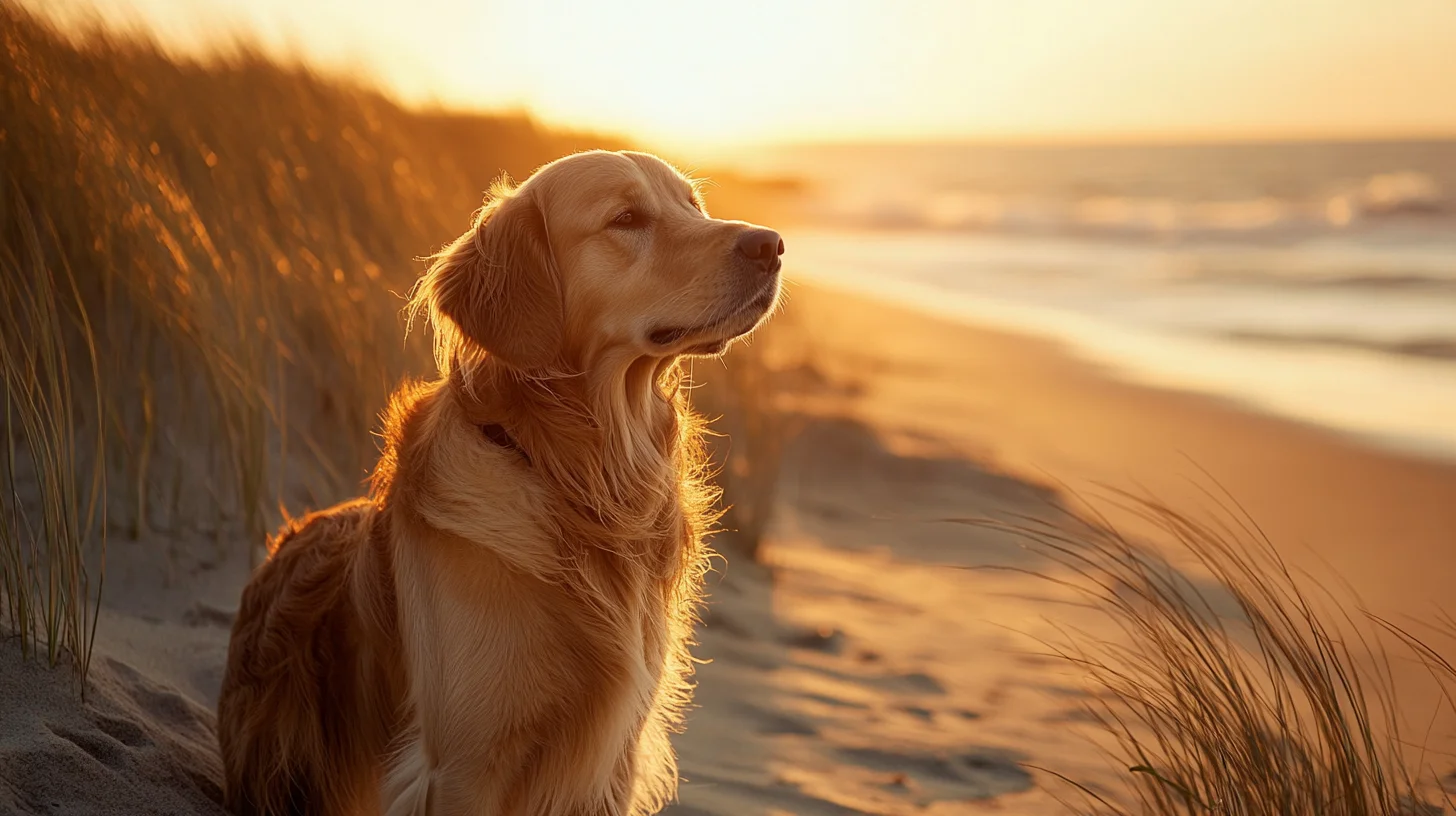
Picture a golden retriever standing at the edge of Egypt Beach in Scituate at 7am on a Tuesday in July. The sun is barely above the horizon, throwing a long, warm stripe of gold across the sand. The beach is empty — not a single other person or dog in sight. The tide is out. The light is hitting him from the side, catching every strand of his coat, making him glow like something out of a painting. He's in his element: nose up, ears forward, tail sweeping slowly. That is summer dog photography on the South Shore when everything goes right.
Summer is genuinely spectacular for this kind of work. The South Shore has some of the most photogenic coastline in New England, and long summer days mean two full golden hour windows — one at each end of the day. But summer also comes with real traps: harsh midday sun that flattens everything and bakes your dog, town beach restrictions that close beaches to dogs during peak hours, parks that are crowded by 9am, and heat that can turn a 45-minute session into a very unpleasant experience for everyone involved. The key to great summer dog portraits is working with summer rather than fighting it — and that starts with understanding exactly what the season offers and what it takes away.
1. Why Summer Is One of the Best Seasons for Dog Photography on the South Shore
The single biggest advantage summer offers is time: in July, sunrise is around 5:15am and sunset is close to 8:15pm. That's two separate golden hour windows in a single day — and each one is usable. In winter, you get one narrow window around 4pm if you're lucky. In summer, I can book a 6:30am beach session and a 7:00pm meadow session on the same day. That kind of scheduling flexibility is impossible in any other season.
The backdrops are extraordinary. South Shore beaches in summer have a visual richness that's hard to overstate: tall beach grass catching the wind, wildflowers blooming in the dunes, granite ledge in Scituate draped in sea lavender. The tree-lined trails at Wompatuck State Park are dense, green, and cathedral-quiet in the morning. The meadows along the North River in Marshfield fill in with Queen Anne's lace and black-eyed Susans in late June. Every location that looks good in October looks different in summer — and often more lush, more saturated, more alive.
Reflective water surfaces add compositional depth that you simply don't get in a field or forest. A still pond at golden hour doubles the available light and creates a natural mirror for your dog. Ocean water in low-angle morning sun sparkles in the background in a way that adds three-dimensionality to portraits without any artificial lighting setup. River estuaries — particularly along the North and South Rivers — produce glassy, reflective conditions in the early morning that are genuinely beautiful.
Most dogs are at their most expressive and energetic in outdoor summer environments. The smells are extraordinary for them. The water is a novelty or a joy, depending on the dog. The long light keeps them alert. I've shot in every season, and summer sessions at the right time of day produce some of the most emotionally vibrant portraits — dogs who are fully present, curious, and alive in the frame.
2. The Golden Rule of Summer Dog Photography: Avoid Midday
I never book summer sessions between 10am and 5pm. This is not a scheduling preference — it's a hard line, and it exists for two reasons: image quality and dog welfare, in equal measure.
On the image quality side: overhead summer sun does to dog portraits exactly what it does to human portraits. It creates deep, harsh shadows directly beneath the brow, under the jaw, and inside the ears — what portrait photographers call raccoon eyes. These shadows are nearly impossible to correct in editing without making the image look artificial. Midday sun also blows out highlights on light-colored coats and crushes shadow detail on dark ones. The dynamic range required to hold both a white dog's coat and the sky behind them simultaneously is simply beyond what's available in direct overhead sun.
On the dog welfare side: heat is a real concern, and it compounds quickly. A dog who is comfortable at 70°F in the shade is a different dog at 85°F on open sand with full sun overhead. Panting, distraction, and general discomfort make it nearly impossible to get the relaxed, expressive portraits that make these sessions worth doing. Short-nosed breeds — French Bulldogs, Pugs, Bulldogs, Boston Terriers — are significantly more vulnerable to heat than other dogs. But even athletic, heat-tolerant dogs like Labradors and Vizslas have limits that midday summer sun pushes against.
Morning golden hour in July runs approximately 5:30 to 8:00am. Temperatures are at their lowest for the day, locations are empty, and the light is spectacular — cooler in tone than evening but still warm and directional. Evening golden hour runs approximately 7:00 to 8:30pm. Dogs who have been settled during the day are often calmer and more cooperative in the evening, and the light turns a richer, deeper amber as the sun drops. Both windows work beautifully; the right choice depends on your dog's temperament and your own schedule.
One more note on overcast days: they are excellent for summer dog photography, and many clients are surprised to hear this. Clouds act as a natural diffusion panel, spreading light evenly across the scene without harsh shadows or blown-out highlights. An overcast July morning is often easier to work with than a brilliantly sunny one — and it's particularly forgiving for white and very light-colored dogs who can shift yellow in warm evening light. If your session day turns overcast, don't reschedule. It will probably look better than you expect.
3. The Best Summer Dog Photo Locations on the South Shore
I've been shooting on the South Shore since 2014 and have scouted most of the accessible coastline, conservation land, and public parks within 20 miles of Rockland. These are the locations I reach for most often in summer — each one with a different visual character and a different set of practical considerations.
Scituate beaches — Egypt Beach and Minot Beach are among my favorite summer locations on the entire coast. The granite ledge and boulder outcrops at Egypt Beach are visually unlike anything else in the region — dark, textured stone against a blue-green ocean is a backdrop that makes almost any dog look spectacular. Minot Beach is longer and flatter, with more sand and gentle dune grass. Both beaches allow dogs before 9am during summer months, and both are quiet in the early morning. Note that Scituate has required beach stickers or day permits in recent years — always verify current access rules before booking, as policies can change season to season.
Duxbury Beach is one of the longest barrier beaches on the South Shore — a narrow strip of sand and dune grass stretching several miles with the ocean on one side and Duxbury Bay on the other. The visual scale of it is striking, and the dune grass is particularly beautiful in low-angle summer light. Dogs are allowed on portions of the beach; verify current access and parking logistics before your session, as the town has specific rules about where and when.
Hull — the Nantasket Beach area and the rocky headlands at the tip of the peninsula — offers dramatic elevated coastline with bay views that are stunning at golden hour. The rocky shoreline at the northern end of Hull is less crowded than Nantasket itself and produces a wilder, more dramatic look. Early morning sessions here are quiet, and the light off the water is particularly good in summer.
Wompatuck State Park in Hingham is the location I reach for when a dog overheats easily or simply doesn't enjoy sand and ocean. The forest trails are shaded and cool even on hot mornings, and the ponds inside the park offer beautiful reflective water shots without the wind and sun exposure of a beach. For dogs who are anxious around other animals or people, Wompatuck in the early morning is remarkably quiet and controlled. It's also one of the most visually lush locations on the South Shore in June and July when the undergrowth is full and green.
The Shumatuscacant Hill and Black Pond area in Norwell and Hanover is a hidden gem that most people outside the area have never heard of. Open meadow, a quiet pond, and conservation trails through mixed woodland — all within a few miles of Rockland. In late June and early July, the meadow sections bloom with wildflowers that create a painterly backdrop I genuinely love. This is the location I use when a client wants something that doesn't look like a typical beach session.
The North River and South River conservation areas in Marshfield and Pembroke offer river estuary landscapes that are visually distinctive and technically excellent for photography. Tall reeds, open sky, glassy water, and quiet kayak-launch zones give the images a sense of scale and stillness. Morning light on the river is often the softest, most beautiful light I encounter anywhere on the South Shore — the water picks it up and throws it back in a way that's unlike anything on the open ocean. If your dog is calm near water, the river areas are worth considering strongly.
4. How to Keep Your Dog Safe and Comfortable in Summer
Every summer session includes built-in hydration breaks. I always bring water and a collapsible bowl, but I encourage clients to bring their own as well — some dogs drink more readily from familiar bowls. The rule I follow: if the session is 30 minutes or longer, we stop at least once for water, even if the dog doesn't seem thirsty. Heat stress in dogs builds before the visible signs appear.
Avoid feeding your dog a heavy meal within two hours of the session. Heat combined with a full stomach increases the risk of nausea, and a nauseous or bloated dog is not a happy or photogenic one. A light snack an hour before is fine; a full meal is not. This is particularly true for deep-chested breeds like Weimaraners, Great Danes, and Standard Poodles, who are prone to bloat under physical and heat stress.
Brachycephalic breeds — French Bulldogs, Pugs, English Bulldogs, Boston Terriers, Shih Tzus, Boxers — need extra consideration in summer. Their shortened airways make thermoregulation significantly less efficient than other dogs. For these breeds, I recommend early-morning sessions only (before 8am), shorter session durations (20–30 minutes maximum), and locations with access to shade or water for cooling. If a brachycephalic dog starts showing signs of heat stress — excessive panting, drooling, glazed eyes, reluctance to move — we stop immediately.
Beach locations require one specific practical consideration: hot sand. Sand on a full-sun July afternoon can reach temperatures that will burn a dog's paw pads in seconds. This is not a risk at 6:30am — the sand is cool. But if you're ever in doubt, step onto the sand barefoot. If it's uncomfortable for your foot, it will be worse for your dog. Early-morning scheduling eliminates this risk entirely.
Bring a small towel if you're coming to a beach. Sandy paws and wet dogs are both manageable and completely normal parts of a beach session — and honestly, some of the best shots come from a dog who's just splashed through the surf. But having a towel for the end of the session, both for your dog and your car, is practical planning. I always have one in my bag, but one more doesn't hurt.
5. What Summer Portraits Actually Look Like
Summer portraits have a distinct visual palette that's fundamentally different from fall or winter work. The color temperature of summer golden hour light — warm honey and amber — saturates the environment differently. Greens are richer. Warm coats glow. Water picks up the light and throws it back in complex, layered ways. The overall emotional register is joyful, outdoor, and alive in a way that suits certain dogs and certain clients perfectly.
Coat color interactions in summer light are worth understanding before you book. Golden, red, and warm-brown coats — golden retrievers, Irish setters, vizslas, chesapeake bay retrievers — are absolutely at their best in summer evening light. The warm tones in the light match and amplify the warm tones in the coat. The result can be stunning in a way that's almost impossible to achieve at any other time of year.
Black dogs benefit enormously from rim lighting at golden hour — that thin arc of warm light along the outline of the body that separates the subject from the background. In summer, this effect is at its strongest and most reliable. A black Labrador or black German Shepherd photographed at the edge of golden hour with the sun slightly behind them looks completely different from the same dog photographed in flat midday light. The rim light is what makes the coat glow and the subject pop. Without it, black dogs tend to merge into their backgrounds.
White and cream dogs are worth a specific note: morning golden hour is generally better for them than evening. Morning light is slightly cooler in tone, which keeps white coats looking true white rather than shifting warm. A white Samoyed or a cream Golden photographed at 7am looks clean and bright; the same dog at 7:45pm in late July can start to look yellow or orange, depending on how saturated the evening light gets. If you have a light-colored dog and can only choose one window, go morning.
Water as a compositional element is something I use deliberately in summer in ways I can't in other seasons. A dog sitting at the edge of the surf with the ocean picking up the light behind them. Reflections in a still pond at Wompatuck that double the sky. A dog mid-stride through a shallow river crossing with water flying. These are distinctly summer shots — the kind that look different from anything you'd get in November — and they're worth planning around specifically.
6. How to Book a Summer Session on the South Shore Before It Fills Up
Summer is the most in-demand season for sessions on the South Shore, and early-morning slots fill faster than any others. Weekend mornings in July and August are typically fully booked by late May. If you're reading this in April, you still have good options — but reach out soon rather than later.
For preparation: bring water for your dog and plan to arrive at the location a few minutes early so your dog has time to settle and explore before we start. Wear neutral, solid-color clothing — avoiding bright patterns or colors that can reflect onto your dog's coat and shift the color in photos. Bring your dog's favorite treats (high-value ones — summer sessions have a lot of competing smells and distractions), their favorite toy if they have one, and any gear they need for the heat.
What to leave at home: a brand-new harness or collar the dog has never worn before. New gear is a distraction and a discomfort; if you want your dog photographed in a specific harness, introduce it a week before the session and let them wear it a few times first. Also, as tempting as it is to bring the whole family, more people at a session means more competing focal points for your dog. One or two familiar handlers is better than five.
Choosing between morning and evening: if your dog is their most alert, happy, and attentive self in the morning — if they greet the day like it's the best thing that's ever happened — book morning. If they tend to settle into a relaxed, content state in the evening after a day of activity, evening can produce beautifully calm, contemplative portraits. Either window will give you excellent light. The dog's temperament and energy pattern should be the deciding factor. When in doubt, morning is the safer choice — cooler temperatures, emptier locations, and consistent energy.
Frequently Asked Questions
Can I bring my dog to a South Shore beach for a photo session in summer?
Many South Shore beaches allow dogs before 9am and after 5pm during summer months, but rules vary by town and beach. I verify access policies for each location before booking. Sessions are always scheduled around those windows so your dog is welcome and comfortable.
What if it's too hot on the day of our session?
Morning sessions keep heat exposure to a minimum. If temperatures are dangerously high on your session day, I'll reach out to reschedule at no charge — your dog's comfort and safety always come first. This almost never happens with early-morning slots, but the option is always there.
My dog hates the heat. Should I skip summer and wait for fall?
Not necessarily. A 7am beach session in July is often cooler than a 10am meadow session in September. The key is timing, not the season. If your dog is heat-sensitive, I'll recommend an early-morning beach session or a shaded woodland location and keep the session shorter than usual.
How far in advance should I book a summer session?
Ideally by late April or early May. Summer weekends — especially early-morning Saturday and Sunday slots — fill up faster than any other time of year. If you're reading this in June, reach out anyway; cancellations do happen and I keep a short waitlist.
Pro Tip
“The best summer sessions start at sunrise. Bring coffee, leave the dog's breakfast until after, and plan for 45 minutes on location. You'll have the beach entirely to yourselves, the light will be unlike anything you've seen in an afternoon photo, and your dog will be at their most alert and enthusiastic. It's worth the early alarm.”
Summer Sessions on the South Shore Fill Fast
Early-morning beach and meadow slots book up every year — usually by May. If you're thinking about summer portraits, reach out now to check what's still open.
Whether you're booking a signature portrait session, senior dog portraits, or a memory session, every appointment is timed for the best available light — and summer mornings on the South Shore are some of the most beautiful of the year.
More from the Blog
PHOTOGRAPHY TIPS
Golden Hour Dog Photography: Why Timing Changes Everything
Why the single most important scheduling decision is when you shoot...
LOCAL GUIDE
The Best Dog-Friendly Photo Locations on the South Shore
From Scituate's beaches to Wompatuck's forests — a local guide to stunning spots...
SEASONAL
Beach Dog Photography on the South Shore
Summer's coastal cousin — beach session technique, tides, and sand-coat handling.
Photographing Dogs in the Other Seasons
Seasonal Guide
Spring Dog Photography on the South Shore
Cherry blossoms, morning fog, and fresh greens — the spring locations and timing that work for South Shore dog sessions.
Seasonal Guide
Fall Dog Photography on the South Shore
Peak New England color and the most-requested seasonal sessions on the calendar.
Seasonal Guide
Winter Dog Photography on the South Shore
Snow, low sun, and dramatic minimal backgrounds — winter sessions on the South Shore.
“Chris created a fun and easy photography experience with my dog. He quickly understood his personality and got beautiful shots. I would definitely recommend him to anyone looking for a dog photographer.”
For the off-season beach access rules across the South Shore, see the dog-friendly beaches of the South Shore guide.
For idea inspiration across all four seasons, see 47 dog photography ideas grouped by season and location. Booking ahead for the next shoulder season? Here are 5 big reasons to do dog photos in spring.

About the Author
Chris McCarthyProfessional Dog Photographer · Rockland, MA · 11+ years experience
I've photographed hundreds of dogs across the South Shore and Greater Boston since 2014 — every breed, size, age, and temperament. My own rescue, Sully, was reactive and anxious when I got him, and working with him every day taught me how to photograph dogs that other photographers find difficult. I specialize in reactive and shy dogs, seniors, and memory sessions — the sessions that matter most and need the most patience.