Puppy Photography on the South Shore: The First-Year Timeline
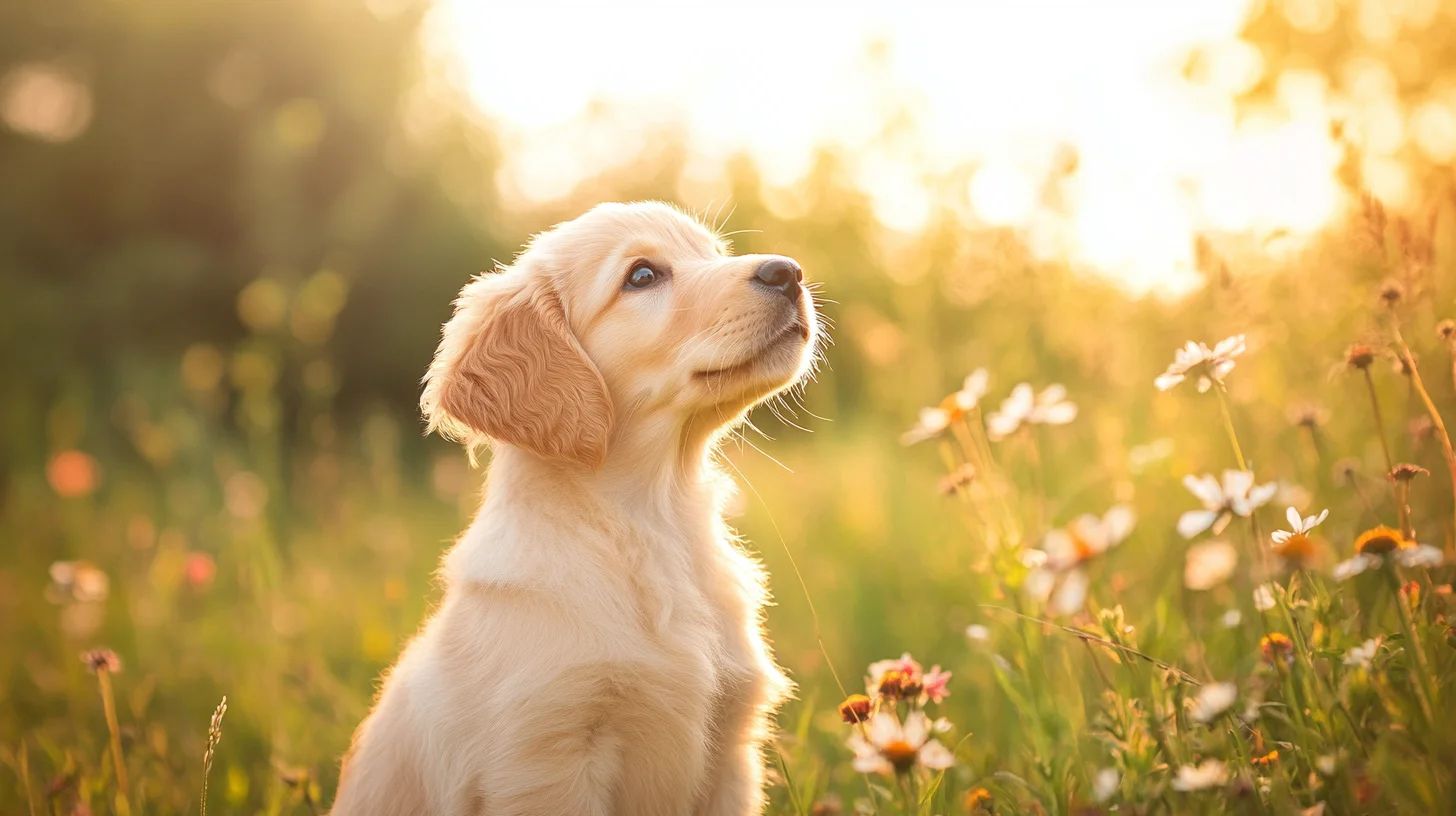
You bring a puppy home and the first thing you do is grab your phone. Of course you do. And then the next twenty minutes are a blur — literally. Every frame is motion. They're mouthing your camera strap, spinning in circles, launching themselves at your knee, and somehow visibly bigger than they were on Monday. By the time you get a shot that isn't blurry, they're already in a different room. Puppy photography on the South Shore of Massachusetts captures one of the fastest-moving windows in a dog's life, and most owners don't fully appreciate how short it is until it's already behind them.
The most common thing I hear from clients who come to me with two- and three-year-old dogs is some version of: “I wish I had done this when they were a puppy.” Not regret exactly — more like a wistful recognition that the tiny-and-new phase happened fast and they don't have anything that really captures it. A few phone shots from the first week, maybe, but nothing that actually holds what that dog looked like at eight weeks. Professional puppy portraits at the right moments in year one document a stage that genuinely won't exist in a few months. This post maps out the first year and the three moments worth capturing.
1. The Three Portrait Windows of the First Year
Not every week of puppyhood is equally photogenic — or equally fleeting. But there are three windows in year one that I consider genuinely portrait-worthy, each for different reasons.
8–12 weeks: the tiny-and-new window. This is the one most people miss because they're in the chaos of new puppy ownership and haven't thought about professional photos yet. But this is when your dog is still lap-sized, their coordination is adorably non-existent, and their face has that wide-eyed, slightly stunned expression of a creature encountering the world for the first time. The puppy you have at nine weeks will not exist again. That specific physical stage — the oversized paws, the disproportionate head, the impossibly soft coat — is gone by month four. This is the window I encourage people to move on fastest.
4–6 months: the awkward teenager phase. This window is optional, but it's genuinely fun to document if you're thinking about a multi-session year-one arc. By four months, personality has fully emerged — you know who this dog is now, what their quirks are, what makes them light up. The puppy coat is starting to shift. They're learning commands with varying degrees of success. There's an endearing gawkiness to this phase that photographs beautifully: ears that don't quite match, a body that's growing faster than they can coordinate. It's not as urgent as the 8–12 week window, but it's a chapter worth having in the story.
9–12 months: almost grown. This is the last real chance to capture genuine puppy energy before adult temperament settles in for good. By ten or eleven months, most dogs have enough basic obedience to work with — they can hold a sit for a few seconds, they respond to their name, they have some impulse control. But they're still puppy-brained in the best way: enthusiastic, reactive to novelty, expressive. You get the best of both worlds — the trainability you don't have at eight weeks, and the puppy spirit you won't have at eighteen months.
Together, all three tell the story of the first year in a way that a single session simply cannot. The difference between a nine-week puppy and a ten-month-old dog is staggering — and having portraits from both ends of that arc, with the four-to-six-month middle chapter if you want it, creates something genuinely meaningful. I've had clients turn the three sessions into a printed wall triptych that shows the full arc of year one. It's one of the most powerful things I've produced in twelve years of doing this work.
2. Why Puppies Are Both the Most Fun and Most Challenging Subjects
I love photographing puppies. I also want to be honest with you about what makes them difficult, because understanding the challenge is what makes the results so satisfying when they work.
Attention span. At eight weeks, a puppy's useful attention window for a session is roughly thirty seconds at a time before they need a break, a sniff, or a reset. This is not a flaw — it's biology. Sessions are structured around it: short bursts of engagement followed by intentional downtime. I'm not trying to sustain a forty-five-minute arc of focused portrait work with a ten-week-old. I'm working in fast, productive micro-windows and giving the puppy time to decompress between them. The session looks completely different from an adult dog session, and it should.
Coordination. Young puppies haven't mastered sitting still, and I don't expect them to. Some of the best puppy portraits I've ever made came from pure, unplanned chaos — a puppy caught mid-leap toward the camera, or looking up with enormous eyes at a treat held just out of frame. Movement shots, when executed right, are often more alive and expressive than posed portraits. I'm not fighting the puppy's nature; I'm leaning into it.
Expression. Here is the honest advantage puppies have over adult dogs: they give expressions automatically that adult dogs have to be coaxed into. Wide-eyed wonder is their default mode. They look at a new stimulus with an openness that older dogs have learned to moderate. That guileless, full-intensity curiosity — ears forward, eyes big, head slightly tilted — is what makes puppy portraits so emotionally resonant. It requires almost no work to capture because it's just who they are.
The fear imprint period. There's a practical benefit to the 8–12 week session that goes beyond the photos. This is a sensitive socialization window in puppy development — new environments and experiences encountered during this period shape how a dog perceives novelty for the rest of their life. A positive, low-pressure session in an unfamiliar outdoor location, handled carefully and at the puppy's pace, is a genuinely good experience for the dog. It's a new place, new smells, kind handling, high-value treats, and a good time. That has real value beyond the portraits.
3. What a Puppy Session on the South Shore Looks Like
Puppy sessions look different from adult dog sessions, and I plan them accordingly. The biggest difference is location. For a very young puppy, I'm not booking Duxbury Beach on a Saturday morning in July — there's too much competing stimulation, too many people and dogs, and too much uncontrolled ground contact before vaccines are fully established. I prefer quieter, contained settings: a shaded trail edge, a low-traffic park area, a location where the puppy can engage with the environment without being overwhelmed by it. The environment should be interesting enough to generate expression without being chaotic enough to eat the entire session.
Duration. Thirty to forty-five minutes is the right window for a puppy session. Adult sessions run longer, but more time is not better for a young dog. A focused, well-paced thirty-minute session with a puppy who is fresh and engaged will produce better work than an hour-long session where the puppy has checked out and the owner is exhausted. I book accordingly.
What to bring. Bring high-value treats — and bring what already works at home. If your puppy goes absolutely insane for a particular piece of chicken or a specific soft treat, that's your tool. Don't experiment with new treats the morning of the session; use what you know works. Bring one favorite toy. Bring a backup leash. That's the whole list.
What to skip. Do not withhold meals before the session to “make them more engaged with treats.” A hungry puppy is not a more motivated subject — a hungry puppy is distracted, slightly anxious, and less emotionally settled. Feed them normally. A well-fed, comfortable puppy who is curious and happy will photograph far better than a hungry one who's too focused on food to give you a genuine expression.
4. How Puppy Coats Change — Why This Window Is Photographically Unique
One of the reasons the 8–12 week window is so photographically distinct is the coat. Most breeds go through at least one significant coat change in year one, and for many breeds the change is dramatic enough that the eight-week puppy and the twelve-month adult could almost be different-looking dogs.
Color and texture both shift. Chocolate Labs often darken noticeably through the first year. Golden Retrievers tend to lighten from a richer puppy gold toward a lighter adult shade — and their puppy coat, which is often a slightly different texture than the adult double coat, catches light in a uniquely soft way. Some breeds show significant marking shifts: patches that are sharp and defined at eight weeks blur and blend by month ten. Some dogs develop merle patterns that intensify; others have facial markings that shift position.
Puppy coat texture itself is different from adult coat, and it doesn't come back. The fluffiness, the softness, the way it catches light at a lower angle and seems to glow — that is specific to the early months. When people tell me their adult golden retriever's coat “isn't as fluffy as it used to be,” they're right. It isn't. That coat was a puppy-specific feature and it's gone.
Scheduling a session before the coat transition captures a stage that genuinely won't exist after month eight or nine for most breeds. If you're thinking about timing and you're already at month four, I'd encourage you to book sooner rather than later — not because it's too late, but because the change is ongoing and every month you wait is a month of the puppy coat you won't have in the final portraits.
5. Turning Puppy Photos Into Something That Lasts
A gallery of digital files is not the same as a physical product you see every day. For puppy portraits specifically, I always talk through the product options during the pre-session consult, because the right product makes the difference between photos you love and photos you forget to look at.
Canvas and framed prints work beautifully for puppy portraits because the images tend to be visually warm, emotionally expressive, and wall-ready in a way that rewards large format. A single hero portrait from the 8–10 week session printed at twenty-four by thirty inches tells a story on its own.
The multi-session wall arc is something I encourage clients to plan from the beginning. If you book all three sessions — early puppy, teenager, almost-grown — you end the year with a cohesive series of portraits that document the full transformation. Printed as a triptych or a set of matched framed prints, this becomes one of the most meaningful things in the room. I've had clients tell me years later that it's the piece of art they'd grab in a fire.
The gift angle is real and worth mentioning. A puppy session is one of the most thoughtful gifts you can give to a new dog owner who is someone you care about — a parent, a sibling, a close friend. It's also a gift couples give each other when a new puppy joins the family. The timing is perfect: they're in the middle of the puppy window right now, they probably haven't thought about professional photos yet, and booking the session for them solves a problem they didn't know they had.
Year-one books are something I've started building more of with clients who do the multi-session arc. A printed album that documents the full first year — tiny-and-new, teenager, almost-grown — compiled into a single book with short captions is a milestone keepsake in the same category as a baby book. It's the kind of thing people pull off the shelf years later and look through slowly. Dogs grow up fast. A year-one book slows it down.
Questions I Hear Most Often About Puppy Sessions
How young is too young for a professional puppy session?
Eight weeks is the earliest I book — that's typically when puppies can leave the litter and travel. At 8–10 weeks, sessions are thirty minutes maximum, very low-key, with lots of breaks. The goal isn't obedience — a ten-week-old has no obedience to speak of, and that's fine. The goal is capturing the tininess and personality of the youngest stage before it's gone.
My puppy has zero training and won't sit still. Is a session pointless?
Not at all. I don't rely on posed sits for puppy sessions. Some of the best puppy portraits I've ever made were from pure chaos — a puppy mid-leap, or looking up with enormous eyes at a treat held just out of frame. Stillness isn't the goal. Personality is. The lack of obedience is not a problem I'm trying to work around; it's a characteristic of this stage that I'm trying to document honestly.
Should I schedule the session before or after initial vaccines?
For the first session at 8–10 weeks, I choose locations with minimal unknown-dog ground contact to reduce exposure risk during the pre-vaccine window. As vaccination series is completed, more locations open up. Discuss your puppy's vaccine status during the pre-session consult and we'll pick a location that makes sense for where they are in their schedule.
Can I book a puppy session and an adult session together?
Yes — and I love doing this. Book the puppy session now and note that you'd like to document year one. We can plan the 9–12 month session for later in the year, and you'll end up with a before-and-after that shows the full arc of their first year. It's one of the most satisfying things I do, and clients consistently tell me they're glad they planned it from the start.
Pro Tip
“Bring a squeaky toy the puppy has never seen before. The novelty creates the wide-eyed, ears-forward expression that makes puppy portraits memorable. Keep it hidden until the exact moment you want it — reveal it once, get the shot, put it away so it stays surprising. New stimulus equals perfect expression. A toy they've played with a hundred times barely registers; a toy they've never encountered stops them cold with exactly the look you want.”
Puppies Grow Faster Than You Think
If you're in the first year with a new dog, now is exactly the right time to book. The tiny-and-new window is shorter than you realize — and most owners wish they'd moved on it sooner.
Whether you're capturing the earliest weeks or planning a full year-one arc, get in touch and we'll map out a session schedule that works. The full overview of how I run puppy sessions — vaccine-window location choices, attention windows, and what to expect at each age — lives on the puppy photographer service page. You can also browse the gallery to see the kind of work these sessions produce.
Keep Reading
SESSION TIPS
How to Prepare Your Dog for a Professional Photoshoot
Six expert tips for getting the most out of your dog's session — adapted perfectly for puppies...
BOOKING GUIDE
What to Expect at Your First Professional Dog Photography Session
From booking to final gallery — here's exactly what happens at a South Shore dog photo session...
NEW PUPPY
New Puppy Portrait Sessions on the South Shore
Planning a portrait session in the first weeks home — timing, vaccinations, and what actually works at 10 weeks vs. 16 weeks...
“It was so fun and easy to work with Chris, and our dogs loved him, too! The photos and artwork are beautiful! Highly recommend booking a session.”

About the Author
Chris McCarthyProfessional Dog Photographer · Rockland, MA · 11+ years experience
I've photographed hundreds of dogs across the South Shore and Greater Boston since 2014 — every breed, size, age, and temperament. My own rescue, Sully, was reactive and anxious when I got him, and working with him every day taught me how to photograph dogs that other photographers find difficult. I specialize in reactive and shy dogs, seniors, and memory sessions — the sessions that matter most and need the most patience.