How to Memorialize Your Dog — 12 Meaningful Ways to Honor Their Life
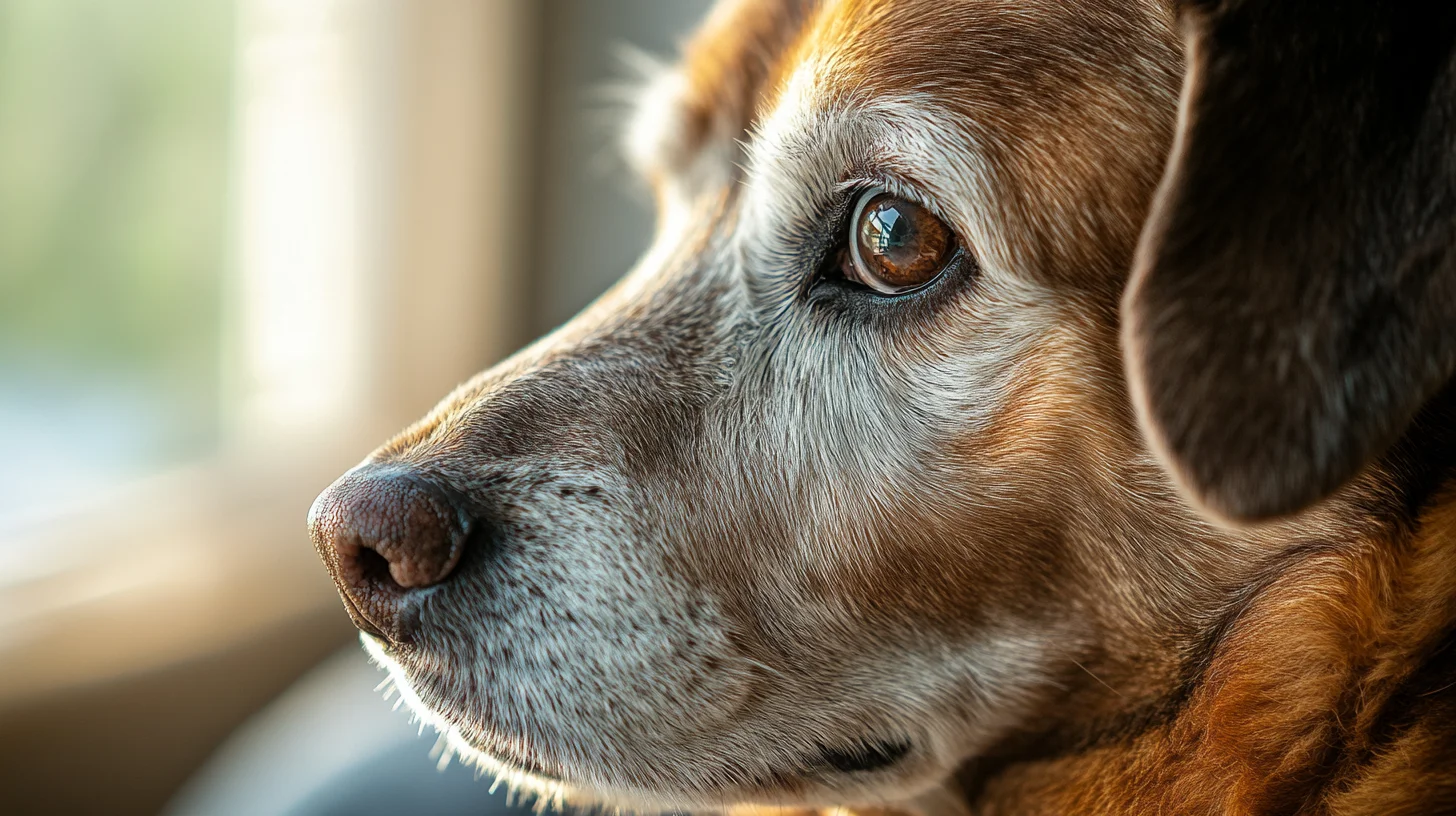
Losing a dog is one of the hardest things you can go through. They're not really pets — they're family. After almost twelve years of photographing dogs, I've watched many families navigate this loss, and the ones who do best are the ones who find a way to keep their dog present in their daily life after the dog is gone. The form that takes is different for every family. Some commission a portrait. Some get a tattoo. Some plant a tree. The point isn't which path you choose — it's having one.
What follows is a practical guide to twelve meaningful ways people memorialize their dogs. Some are tangible, some are quiet acts that no one but you ever sees, and some happen before your dog is gone — not after. Read through the whole list before deciding. The right memorial is almost never the first thing that comes to mind.
1. A Memorial Portrait Session (Before They're Gone)
The single most important thing I can tell you: if your dog is still here and you have any reason to think their time is coming, schedule a portrait session now. Not next month. Now. Owners who book a session a week before they lose their dog never regret it. Owners who wait, often do.
A memorial portrait session is different from a regular session. It moves slowly. We work on your dog's timeline, in a setting they're comfortable in — usually at home or somewhere they love. We capture the details that matter most: the gray on their muzzle, the cloudiness in their eyes, the way they curl up at your feet. These aren't flattering Instagram shots. They're honest portraits of who your dog is right now, made to hang on a wall and look at every day for the rest of your life.
On the South Shore, I run Memory Sessions specifically for this. They're bookable within a few days when the timeline is short. For dogs who are still doing well but are clearly seniors, the senior dog photography service covers the same ground with less urgency. The full breakdown of what to expect is in what to expect from a senior dog photo session.
2. Wall Art From an Existing Photo
If your dog is already gone and you didn't get formal portraits, all is not lost. A skilled photographer or printer can take a phone photo you love and produce gallery-quality wall art from it. Not every phone image will hold up at 24x36 inches, but many will at 11x14 or 16x20. The key is choosing an image where their eyes are sharp, the light is on their face, and the expression is unmistakably them.
The fine-art print is the most permanent way to keep them visible in your home. It's different from a snapshot in a frame on a desk — wall art at scale becomes part of the room, part of how you live. For options and sizing, see the products page. If you'd like help choosing or preparing an existing image for print, reach out — I help with this regularly.
3. A Memorial Tattoo
One of the most common memorial choices is a tattoo — most often a paw print, a portrait silhouette, the dog's name, or a date. Memorial tattoos work because they're always with you and they don't require explanation. They're especially good for people who don't want their grief on display in their home but still want a physical reminder.
If you go this route, find a tattoo artist who specifically does pet portraits or fine-line work. Bring multiple reference photos showing different angles. The tattoos that hold up over years are the ones built from clear, well-lit reference images — which is one more reason to get good photos of your dog while they're still here.
4. A Custom Painting or Oil Portrait
Custom-painted dog portraits — oil, watercolor, pastel, charcoal — sit between a photograph and a tattoo. They're tangible, they hang in your home, and they're unmistakably handmade. A good painted portrait can run anywhere from $200 to several thousand dollars depending on size, medium, and the artist's career stage.
Painted portraits work especially well when you want something stylized rather than literal. They're also a strong choice when you don't have a single photograph that captures your dog completely — a painter can work from several references to build a composite that feels more like the dog than any one photo ever did. Massachusetts has several talented pet portrait painters; ask local galleries or art schools for referrals.
5. A Paw Print or Nose Print Cast
Many veterinarians and animal hospices will take a paw print or nose print impression as part of end-of-life care. If you didn't get one done at the time, some companies can create casts from a clear photograph of your dog's paws. The print can then be framed, mounted in a shadowbox, or pressed into clay or silver.
Paw prints are quiet memorials — they don't shout the way a wall portrait does, but they're intimately specific to your dog. Many families display them on a small shelf or mantel where they can see them daily without it feeling like a constant reminder of loss.
6. Memorial Jewelry
Pet memorial jewelry includes pendants with ashes set into resin, necklaces with paw print impressions, rings with engraved names, and lockets that hold a clipping of fur. The category has grown a lot in the last decade — there are now jewelers who specialize entirely in pet memorial pieces.
Memorial jewelry works for people who want the memorial close but private. It's also a strong gift when a friend or family member loses a dog. If you go this route, look for jewelers with clear lab certification for the materials and a track record of pet memorial work specifically — there are scams in this space.
7. A Memorial Garden or Planting a Tree
A memorial garden or tree planted in your dog's honor is a living memorial. It changes with the seasons, grows over the years, and gives you a physical place to sit with your grief. For dogs buried in the backyard, marking the spot with a tree, a small bench, or a flowering shrub turns the location into something purposeful rather than something painful.
On the South Shore, dogwoods, lilacs, and Japanese maples all work well as memorial trees — they bloom each spring as a kind of annual remembrance. If you don't have outdoor space, container herbs or perennial flowers indoors serve the same purpose. The point is something living that you tend to.
8. An Album or Memorial Book
A printed album or photo book is one of the most underrated memorial forms. Unlike a wall portrait, it's held in your hands, taken off a shelf, opened deliberately. Kids and grandkids who never met your dog can flip through it years later and meet them on the page. A good album includes more than just the best photos — it includes the everyday ones, the messy ones, the ones that capture personality more than they capture beauty.
For South Shore clients, I produce custom fine-art albums with images from the full life of the dog — puppy photos sourced from your phone, formal portraits from our sessions, and the in-between candids that tell the actual story. See the products page for album options, or look at the magazine-cover format for a different angle on the same idea.
9. Donating in Their Name
Donating to a rescue, shelter, or breed-specific organization in your dog's name turns grief into something useful. The most meaningful version is donating to the place your dog came from — if they were a rescue, the shelter that took them in; if they were a breeder dog, a breed-specific rescue for that breed.
Some shelters will name a kennel, a feeding station, or a memorial brick after your dog if the donation is large enough. Others list memorial gifts in their newsletter. South Shore-area shelters that accept memorial donations include the Plymouth-based Animal Rescue League satellite, the Scituate Animal Shelter, and the MSPCA at Nevins Farm in Methuen.
10. An Engraved Stone, Plaque, or Memorial Marker
A stone or plaque engraved with your dog's name and a brief inscription can be placed in a garden, at a favorite walking trail (with the property owner's permission), or in the home. Some families also commission a small bronze plaque for a memorial bench in a public park — the Town of Rockland and several South Shore conservation areas have programs for this.
Inscriptions work best when they're specific. “Beloved companion” reads as generic. The dog's actual name, dates, and a one-line description of who they were (“the best running partner”, “our shadow”, “eleven good years”) reads as theirs.
11. A Digital Tribute or Memorial Video
For families spread across geography, a digital tribute can be a shared way to grieve. A short video set to music — built from photos and short clips collected from family members — works well for memorial gatherings or as a shared archive. The same content posted on social media often produces an outpouring of memories from friends who knew your dog.
The digital form is most powerful when paired with something tangible. A digital album that never gets opened isn't much of a memorial. But a video shared once, that lives on a hard drive afterward, can be a real anchor for the family.
12. Volunteer Work or a Quiet Ritual
Some of the most meaningful memorials are the ones no one else sees. Volunteering at a shelter once a month. Walking the same trail your dog loved on the same day of the week. Donating a few hours to a foster organization. Making sure another dog gets to experience what your dog had.
These memorials are practices rather than objects. They keep your dog's influence visible in the world even after they're gone. For owners who don't want a tangible reminder around the house — or who feel that nothing physical could ever capture what their dog was — a ritual or volunteer commitment often turns out to be the most honest form of remembrance.
How to Decide What's Right for You
Most families combine two or three from this list rather than picking one. A portrait on the wall plus a memorial tree in the yard. A tattoo plus a donation to the dog's rescue organization. An album plus a paw print on the mantel. The combinations are personal.
If you're reading this because you've already lost your dog, give yourself time. The best memorials often come months after the initial grief — once you've had time to think about what specifically you want to hold onto. If you're reading this because your dog is still here and you can see what's coming, the single piece of advice I can offer is to get the photographs taken now, while you still have the chance.
For more on what a session with a senior or end-of-life dog actually looks like, see why senior dog photography matters, or read a close look at the memory session itself — photographing dogs at the end. For the broader portrait photography overview, the dog portrait photography pillar walks through studio vs. outdoor, breeds, and what separates a portrait from a snapshot.
Memory Sessions on the South Shore
If your dog is still here and you want to capture them while you can, Memory Sessions are bookable within a few days. Sessions start at $395 with same-week scheduling for time-sensitive cases.

About the Author
Chris McCarthyProfessional Dog Photographer · Rockland, MA · 11+ years experience
I've photographed hundreds of dogs across the South Shore and Greater Boston since 2014 — every breed, size, age, and temperament. My own rescue, Sully, was reactive and anxious when I got him, and working with him every day taught me how to photograph dogs that other photographers find difficult. I specialize in reactive and shy dogs, seniors, and memory sessions — the sessions that matter most and need the most patience.